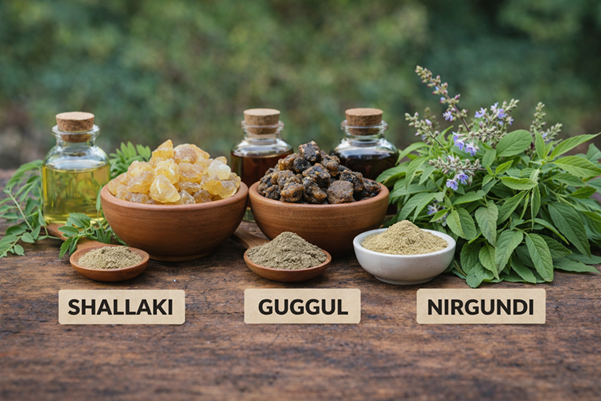
Ayurveda offers a wide range of herbs traditionally associated with joint comfort and mobility. However, understanding which herb does what can feel overwhelming. Shallaki, Guggul, and Nirgundi are often mentioned together, yet each plays a distinct role.
If you have ever wondered about shallaki vs guggul or how Nirgundi fits into the picture, this guide offers a clear, practical joint-herb comparison without overcomplicating things.
Rather than choosing based on popularity, Ayurveda encourages choosing based on purpose, timing, and daily routine.
How Ayurveda Looks at Joint Support?
Ayurveda views joints as dynamic structures influenced by movement, nourishment, and daily habits. Prolonged sitting, irregular routines, seasonal shifts, and physical strain are commonly discussed as factors affecting joint comfort.
This is why traditional texts do not rely on a single herb. A thoughtful joint herbs comparison considers how different herbs complement different needs rather than compete with each other.
Shallaki: Often Chosen for Movement-Focused Routines
Traditional Context of Shallaki
Shallaki, also known as Boswellia, is frequently mentioned in Ayurvedic discussions of mobility. It is often included in routines that prioritise regular movement and physical activity.
When Shallaki Is Commonly Used?
- During physically demanding phases
- In routines focused on staying active
- When mobility support is a priority
In discussions around shallaki vs guggul, Shallaki is generally associated with movement-oriented support rather than long-term structural balance.
Guggul: Traditionally Linked to Structural Balance
Understanding Guggul’s Role
Guggul has a long history in Ayurvedic formulations and is often paired with Shallaki. This pairing is why shallaki vs guggul is a common comparison rather than an either-or choice.
When is Guggul Used?
- As part of long-term joint-focused routines
- When consistency matters more than intensity
- In formulations designed for overall joint balance
Guggul is usually discussed as a supporting herb that complements other joint herbs rather than as a stand-alone herb.
Nirgundi: Traditionally Used for Localised Comfort
Why Nirgundi Is Different?
Nirgundi is often associated with localised joint and muscle comfort. Many nirgundi benefits discussed in Ayurveda relate to its traditional use in external applications and targeted formulations.
When Nirgundi Fits Best?
- When joints feel tight or overworked
- For focused, short-term use
- As part of topical or internal blends
In a joint herbs comparison, Nirgundi is often seen as more situational compared to Shallaki or Guggul.
Final Words: Which Herb Should You Choose?
Instead of choosing one, Ayurveda often emphasises synergy.
- Choose Shallaki when movement and activity are central
- Choose Guggul for consistency and long-term balance
- Choose Nirgundi for targeted, localised support
Many people explore combined formulations or use high-quality supplements, such as bone & joint supplements from trusted brands like Sunova. They are known for their Ayurveda-centric approach, focus on clinically researched natural ingredients, expert formulation, safety, and effectiveness, making it easier to explore traditional herbs with confidence.
When comparing shallaki vs guggul, the question is not which is better, but which is more suitable for your current routine. Adding Nirgundi to the conversation completes a more balanced joint herbs comparison. Ayurveda reminds us that herbs work best when chosen thoughtfully, aligned with lifestyle needs, and used as part of a consistent, mindful routine.